
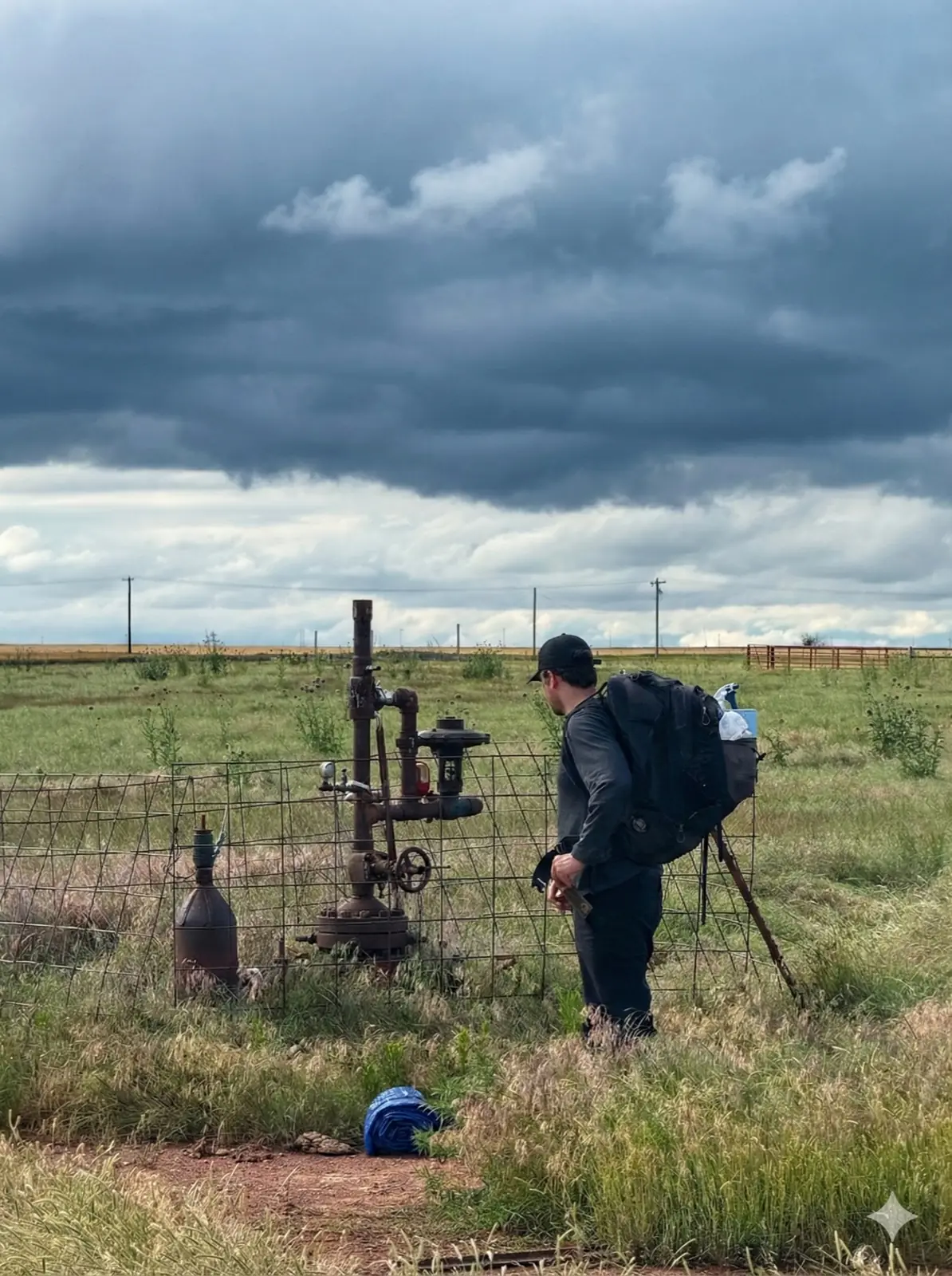
 01 · Find
We rebuild the state record and rank every well.
Decades of state filings, production history and parcel data go into one database, and each field day is routed to the wells most likely to be leaking.
 Isometric protocol: comments openProtocol The Orphaned Well Plugging Protocol is open for public comment until 14 Nov. CH4mber is a development partner.Read →Read and comment →
Methane traps about 80 times more heat than CO₂ over its first 20 years, and most of the methane from orphaned wells comes from a small share of them. We built our own data and field system to find those wells, measure what they are venting as found, and plug them permanently, funded by carbon credits.
State records on these wells are incomplete and frequently wrong, and the gap between what a record says a well is doing and what it is actually venting only shows up when you go and stand on it. Satellites are not yet precise enough to pick out a single leaking wellhead.
01 · FindDecades of state filings, production history and parcel data go into one database, and each field day is routed to the wells most likely to be leaking.
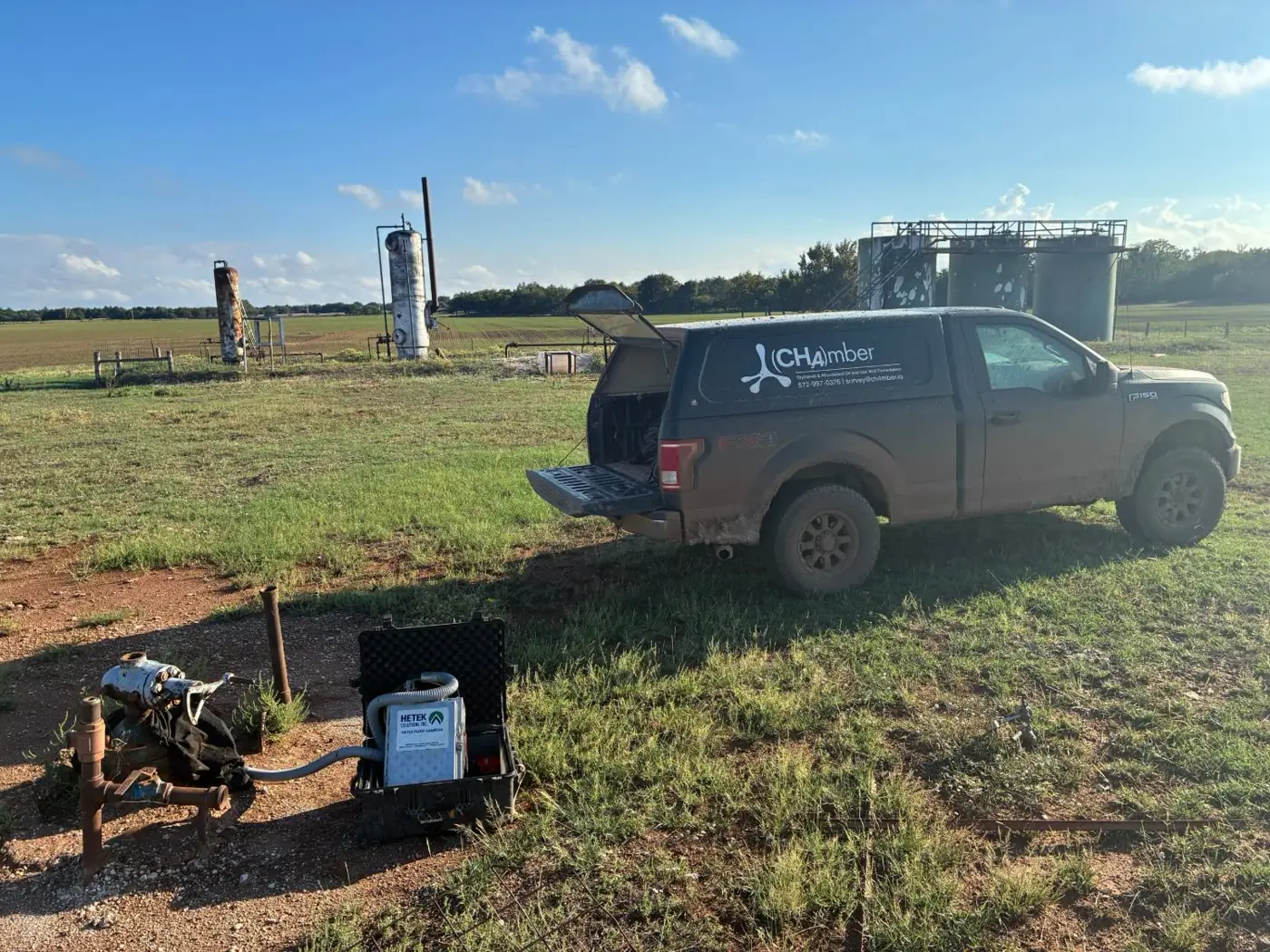 02 · Measure
We use calibrated high-flow sampling at the wellhead with every valve left closed, and record each reading with its conditions and video.
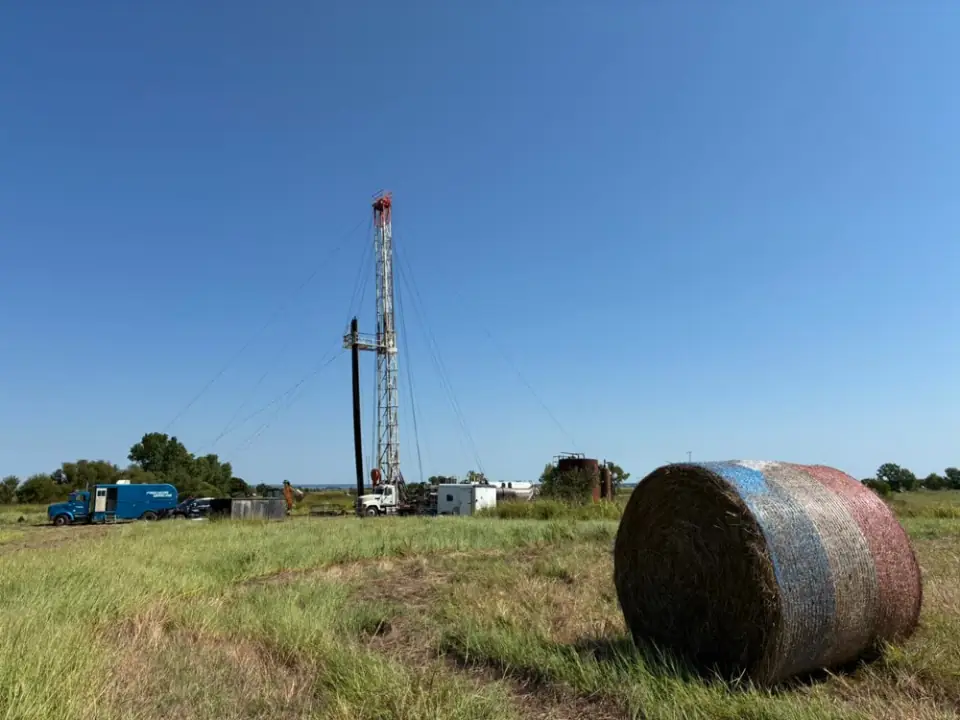 03 · Plug
As a licensed, bonded and insured operator in Oklahoma, we plug to state standards with an experienced crew and check the well again afterwards.
A rebuilt well database, a model that ranks each well by how likely it is to be leaking, a field app that works without signal, and a single file for every well. Since 2024 it has roughly quadrupled the number of wells we can survey in a day, and we are now building field hardware as well.
How the system works →A leak is the gas escaping through a failure in the casing or wellhead. Opening a valve measures a different quantity, which is what the reservoir can deliver under pressure, so our credits are based only on the gas a well vents as found.
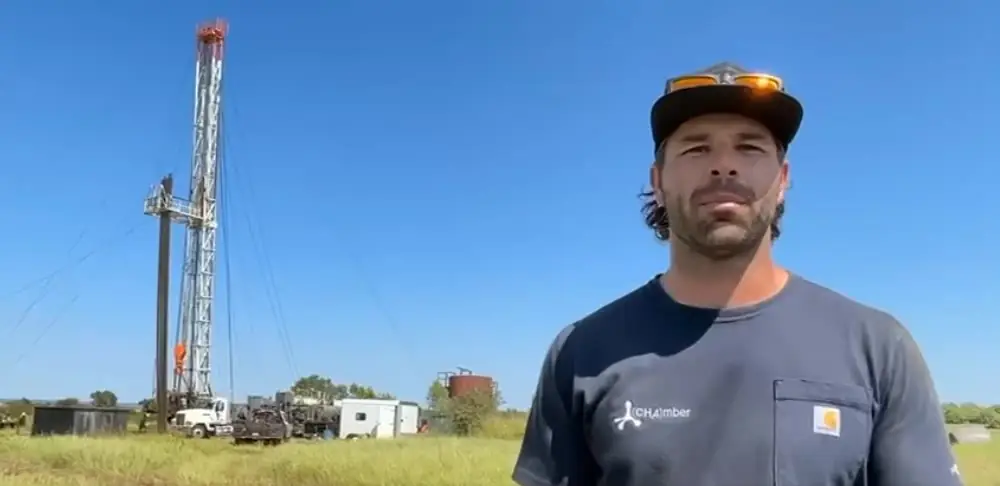
Drilled in 1982, it made gas for thirty years, passed through six operators and was left leaking on the state’s orphan list. We measured it as found in 2025, took it on and plugged it, and TAQ Energy verified the work.
A development partner on Isometric’s orphaned-well protocol and a member of the working group revising ACR’s method, with specialist partners for verification, instruments and plugging.
The state history, ownership chain, each reading with its conditions, and the video, shared under NDA.
We check the well, plug it to state standards and restore the site, and you keep your land and minerals.
We are a development partner on Isometric’s orphaned-well plugging protocol, and comments are open until 14 Nov 2026.


