
What we find at orphaned wells, and what it means for the credits.
Long reads from the field, the data and the methodology, written by the people doing the work. Each sits on the timeline where its story happened, beside the milestones that got us here.
RSS feed1,666 of those wells conclusively tested in Oklahoma and Texas.
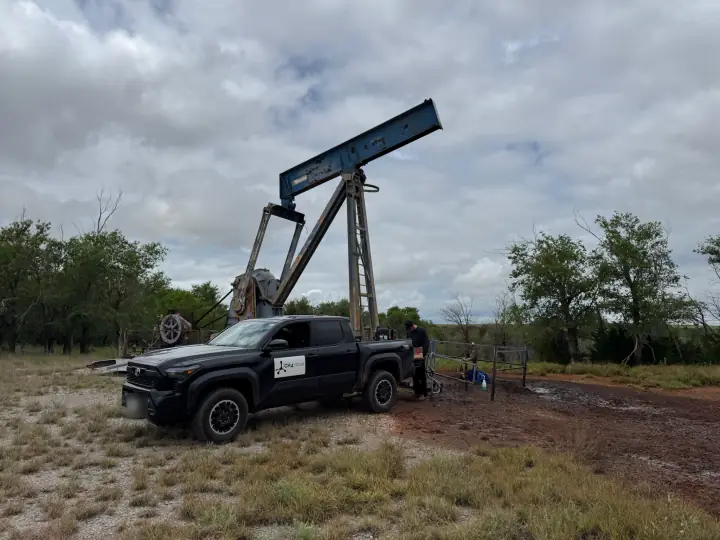
A few orphaned wells carry most of the methane, and the obvious clues do not find them
Of 1,042 Oklahoma orphaned wells we tested, 17 hold 80% of the methane. Most signals meant to predict which ones did not hold up.
By Malcolm CameronRead the field note →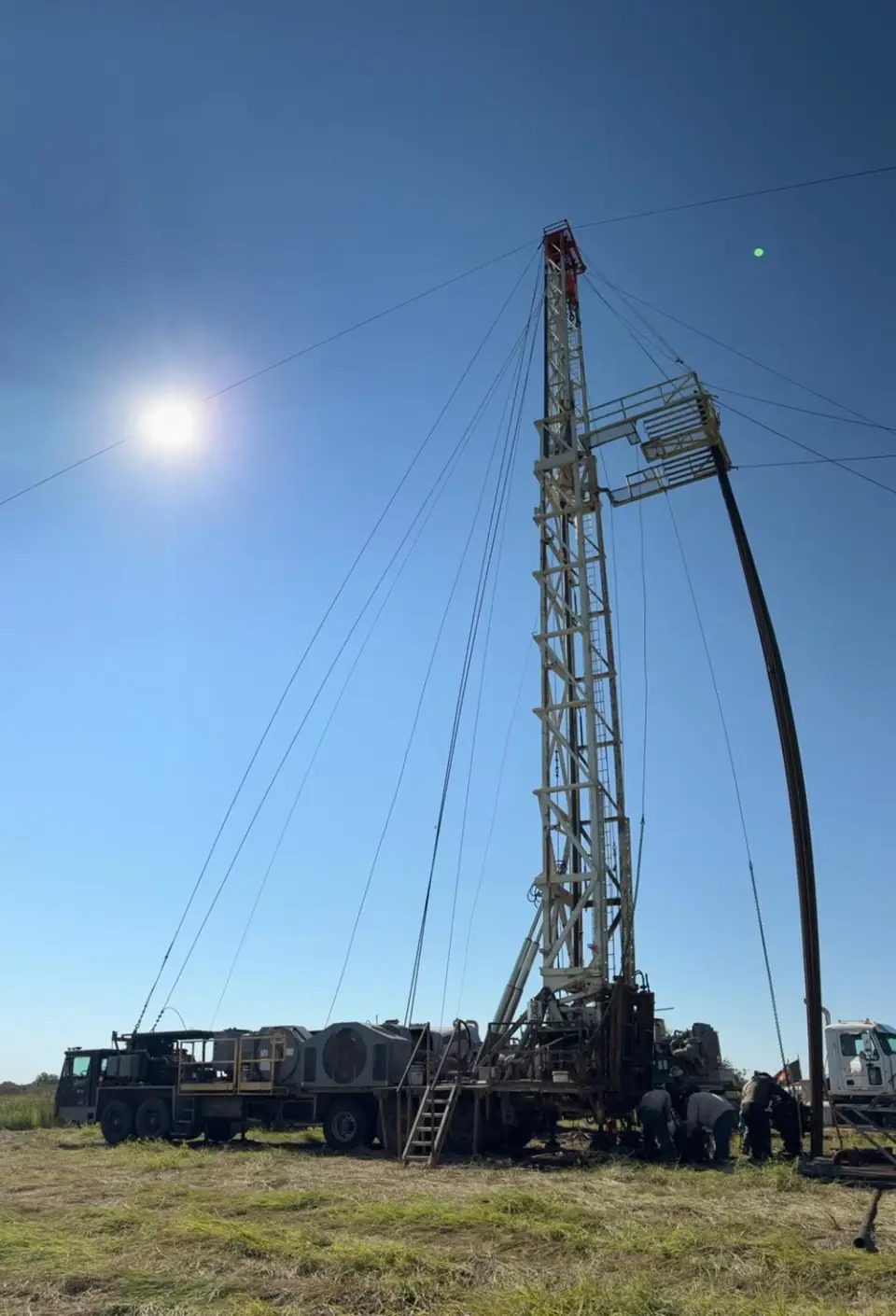
How long a leak lasts depends on a pressure nobody has measured
A leak is a choke on a tank. The choke sets the rate; the tank sets how long. Why the answer turns on an unmeasured pressure, and what would settle it.
By Malcolm Cameron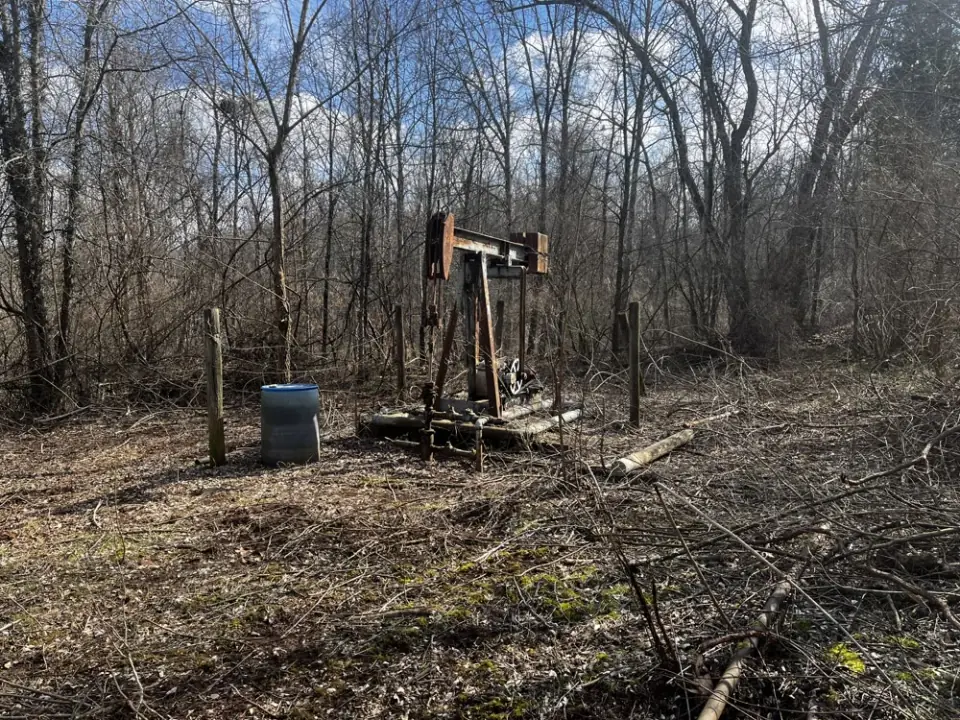
How orphaned wells are found and their methane measured, from orbit to the wellhead
A guide to the tools that find orphaned wells and measure their methane, from satellites to the wellhead, and what our test of two satellite products showed.
By Malcolm Cameron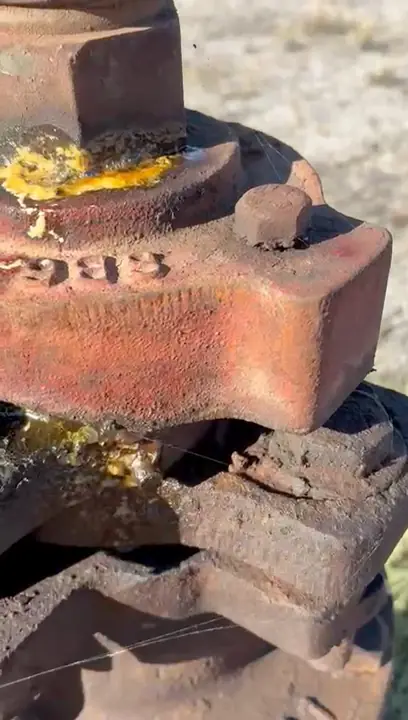
Most orphaned wells have no production record to fit a decline curve to
83% of Oklahoma's listed orphaned wells predate the electronic production record. Where a history survives, a decline fit can flip sign.
By Malcolm Cameron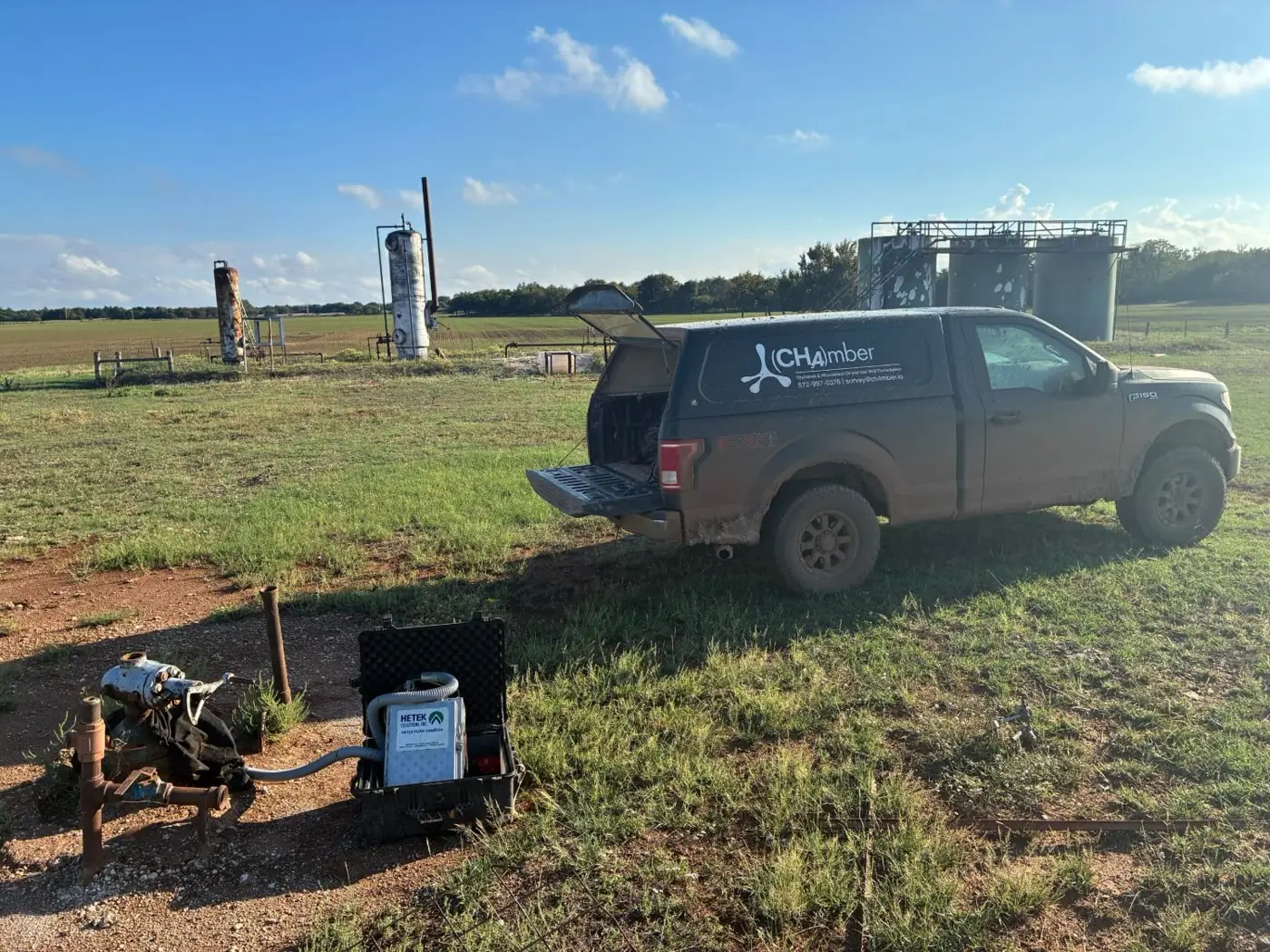
Opening an orphaned well to measure its leak measures something else
A leak and an opened-well flow test on the same orphaned well can differ many times over, and credits scale with whichever one a project measured.
By Oliver ChornousWe reviewed drafts of both issue primers, written with UT Austin.
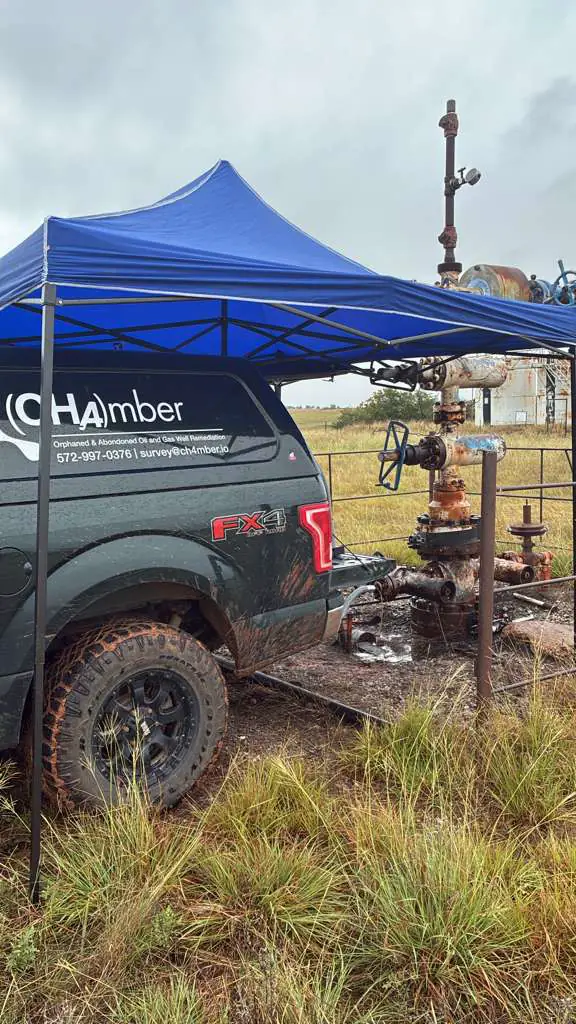
Most of the wells we could not reach were stopped by a person, not the ground
We built a terrain score to predict which orphaned wells a truck could reach. Tested against 127 field visits, it predicted nothing. The gap was people.
By Malcolm Cameron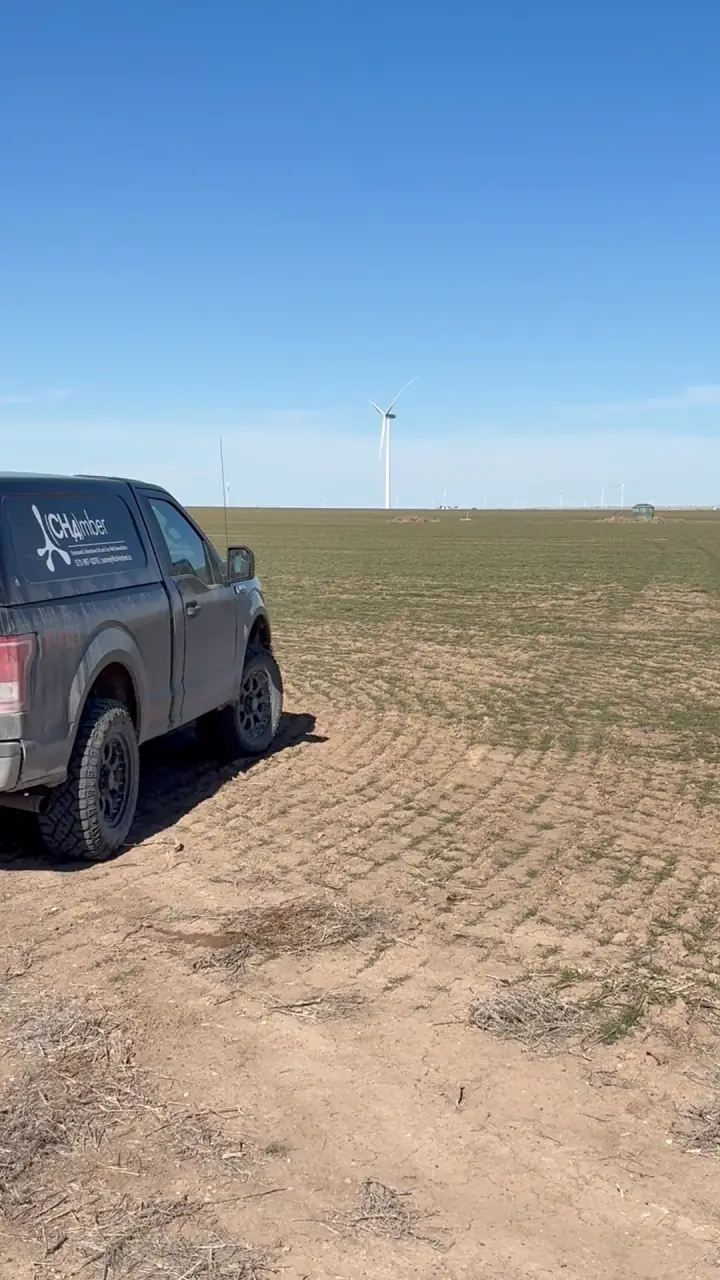
When to stay in a survey area, when to leave, and when the data cannot say
The written rules our crews use to work an area harder or walk away, why they count wells measured, and why 'uncertain' is a verdict of its own.
By Malcolm CameronThe group met through 2026 to rewrite the methodology as version 2.0.
The protocol sets out how a leaking well is measured, how its emissions are projected and how credits are issued.
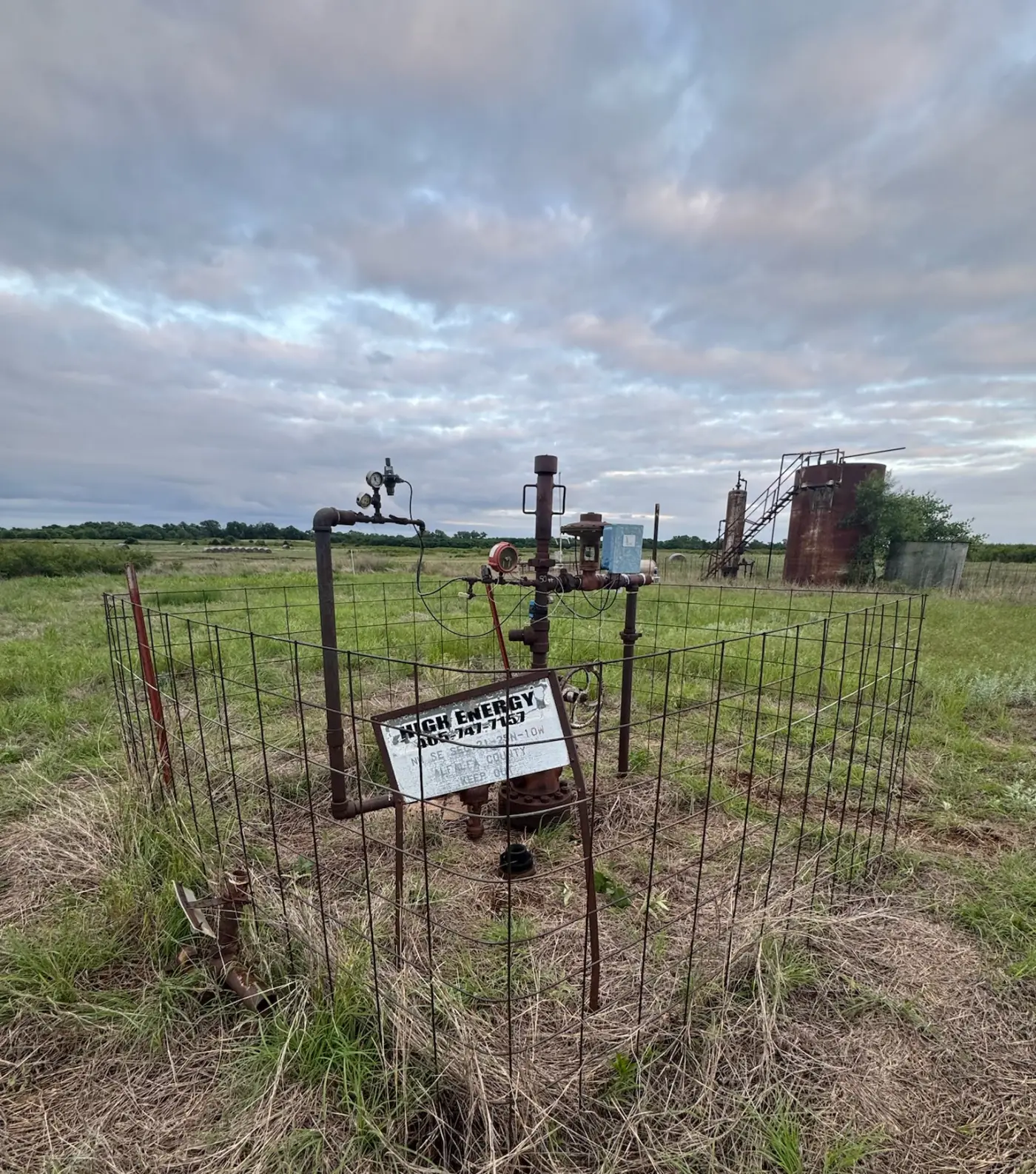
Once a well is plugged, its leak can never be measured again
We measured Schnitzer #2 on four dates before we plugged it. After the cement, that record is all the evidence of its leak there will ever be.
By Mike NessSealed with cement after four dates of as-found readings. After the plug, its leak can never be measured again.
Measured as found at the wellhead. The first of four dates of readings.
What lets us take on an orphaned well as its operator, the step before plugging it.
For press and partnership enquiries, please write to Oliver at [email protected].
Credits