
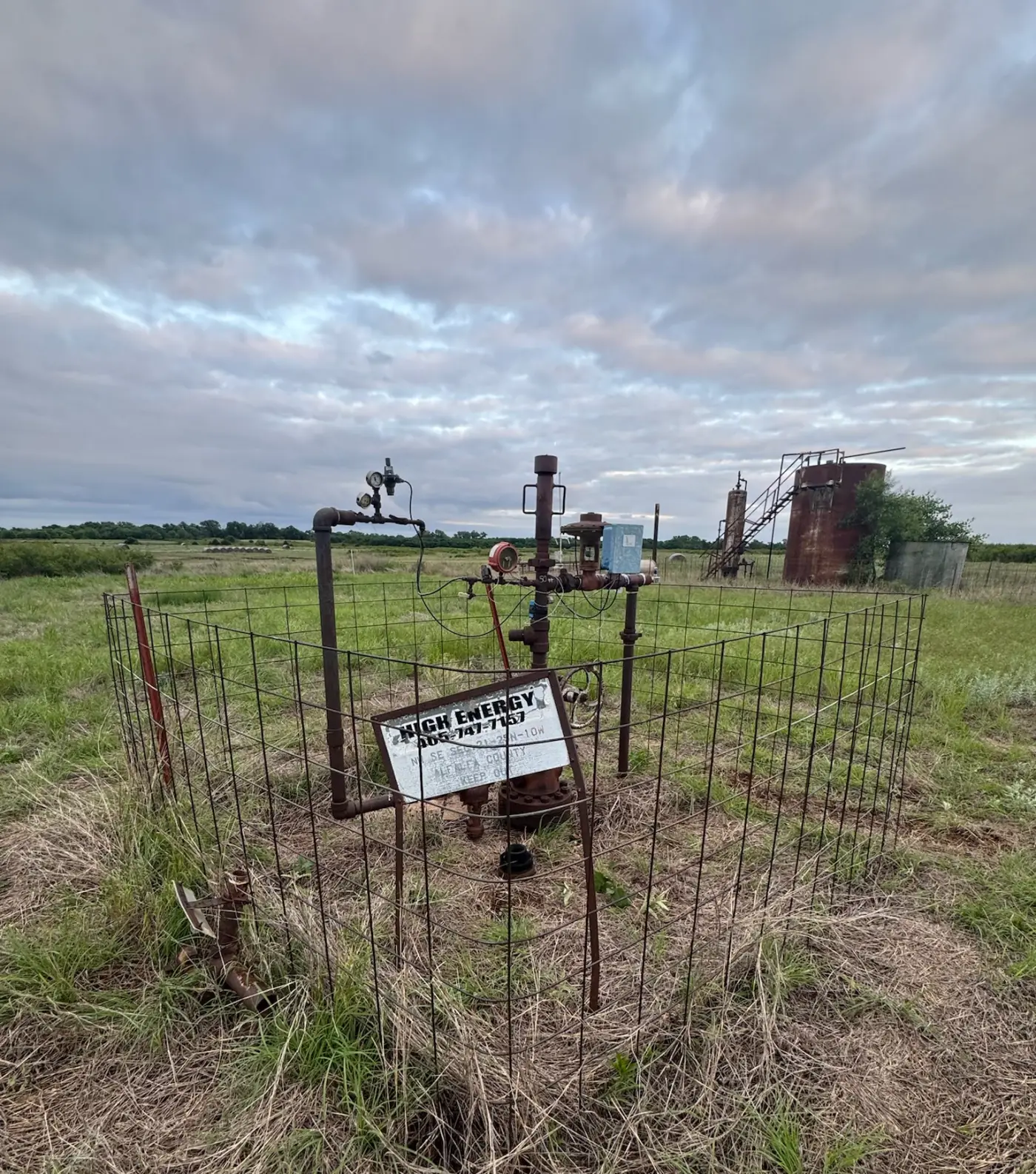
On 4 September 2025 a plugging crew set five cement plugs in Schnitzer #2, an orphaned gas well in Alfalfa County, Oklahoma, and sealed it. From that afternoon, what the well had been venting could never be measured again. Everything anyone will ever know about that leak is what we recorded beforehand.
The same is true of every well plugged for carbon credits. The credit is for methane that would have escaped had the well stayed open, and once the well is sealed there is no going back to check. So the measurements made before the plug are the whole evidential record for the credit, and how they were made matters as much as what they say.
What we recorded before the plug
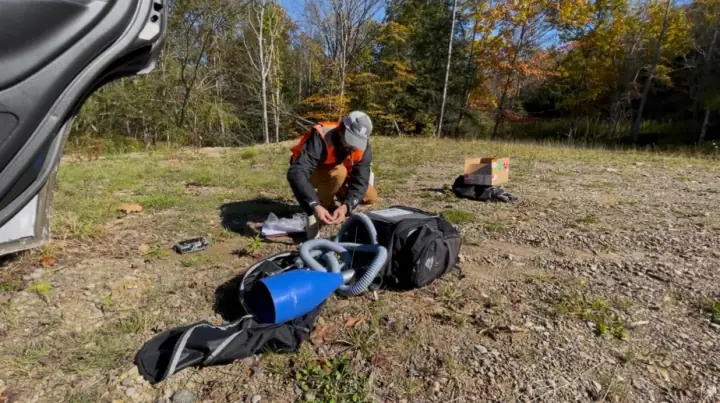
Our engineering manager, Mike Ness, a Professional Engineer, led four sets of measurements on the well, on 27 May, 2 July, 25 August and 27 August 2025. Nothing on the well was opened, turned or pressurised; every valve stayed closed. A hood over the failed fitting drew the leak and the air around it into a Hi-Flow sampler, which measures methane in that stream against background air and logs each reading with the instrument's serial number, the time and a field note.
Across the four dates, 12 readings were accepted. The day averages were 48.6, 48.6, 55.1 and 53.7 litres of methane per minute, and the readings together averaged about 52 litres per minute (LPM).
12accepted readings, on four dates
0valves opened

Why one reading is not enough
On 25 August the accepted readings ran from 46.7 to 59.8 LPM over one morning: a spread of about 13 litres a minute at the same fitting, with the same instrument and the same hood. On 27 May the three accepted readings, taken within half an hour, ran from 43.8 to 51.2.
The day averages moved as well, from 48.6 in May and again in July to 55.1 in late August. Gas escaping through a failed wellhead is pushed by the pressure behind it and affected by conditions at the surface. Our read is that temperature and barometric pressure move the rate over a day, and soil moisture and weather move it over months. Had we taken a single reading and stopped, it could have landed anywhere between about 44 and 60 LPM, a difference of more than a third on the same well, and each would have been a true measurement of that moment.
The first date also shows what the log is for. Alongside the accepted readings on 27 May, the sampler logged readings taken while the hood was still being seated over the leak, which read low because gas was escaping around the seal, and one taken in a gust of wind. They stay in the log with the field note that explains each one, and they are left out of the average, so a reviewer can see what was set aside and why.
Repeat dates give a far better answer than one reading. However, no number of dates can be added once the well is plugged, which is the argument for planning the measurement carefully, before anything irreversible happens.
Two measurements, made for different reasons
We now measure a well in two separate stages, because they answer different questions.
The first is a screening survey. With the landowner's permission to come and look, and before any agreement, we find the leak and measure it as found. It tells us whether a leak exists and roughly how big it is, which is enough to decide whether a well is worth asking a landowner about. It is not the baseline.
The second is the official baseline, made after the landowner has signed the carbon credit transfer agreement. The method is the same: as found, every valve closed. What rises is the standard of evidence: repeat readings to the cadence the governing methodology sets, the sampler's calibration certificates and logs, and video, photographs and weather data captured in our field app. This is the record a verifier checks. We take on the well as its operator last, after the baseline and our due diligence, and then plug it. How we work describes each step.

Splitting them keeps a quick first look from becoming, by default, the evidence a credit rests on. The official record is made on a schedule planned for it, with the evidence a verifier will ask for, rather than assembled afterwards from whatever was written down on the first visit. And because the baseline comes before we take on the well, a result that does not match the screening can stop a project before the plug is committed.
Schnitzer #2 was measured in the older order
Our first well did not follow this order, and we do not present it as the template. Its four dates were one campaign. The first visit, on 27 May, was the survey that found the leak, and its readings count in the average. The landowner signed in early August, we took on the well as its operator that month, and the last two dates came after both. Nothing in that sequence separated a screening look from an official baseline.
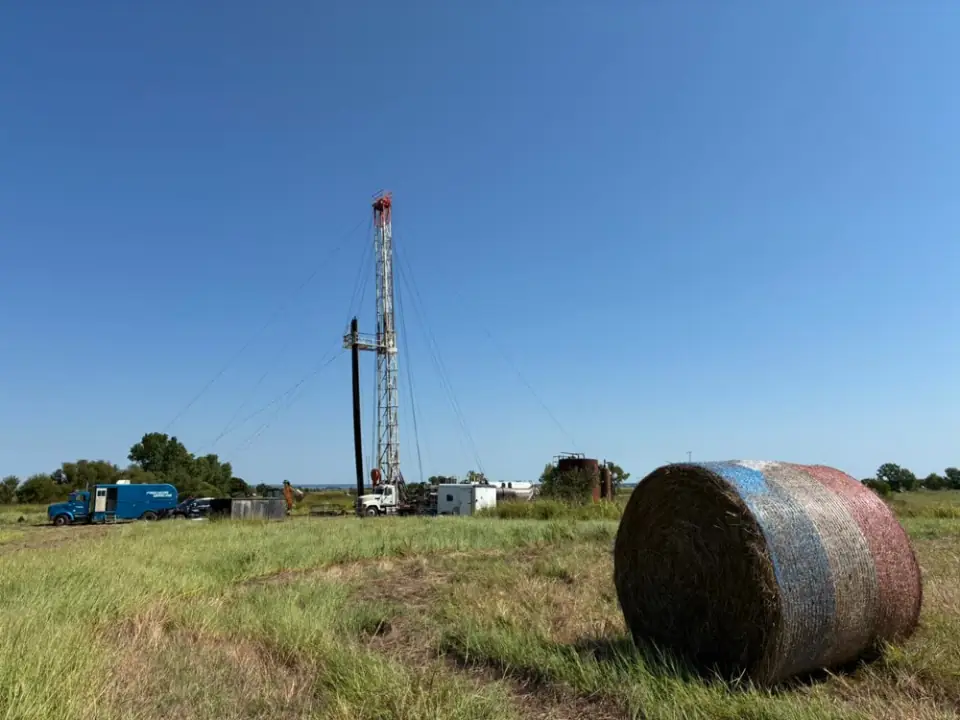
The record also has gaps that a baseline made today would not. On two of the four dates the accepted readings span about an hour or less, and the file documents no gas sample taken to confirm the gas's composition. We would do both differently now, and neither can be fixed, because the well is full of cement.
What the record does show still holds: four dates over three months, 12 accepted readings with every valve closed, an average of about 52 litres a minute, and a plug that TAQ Energy verified. We learned what a baseline needs by making one, and the order we use now puts the careful measurement after the landowner agrees and before anything that cannot be undone.