
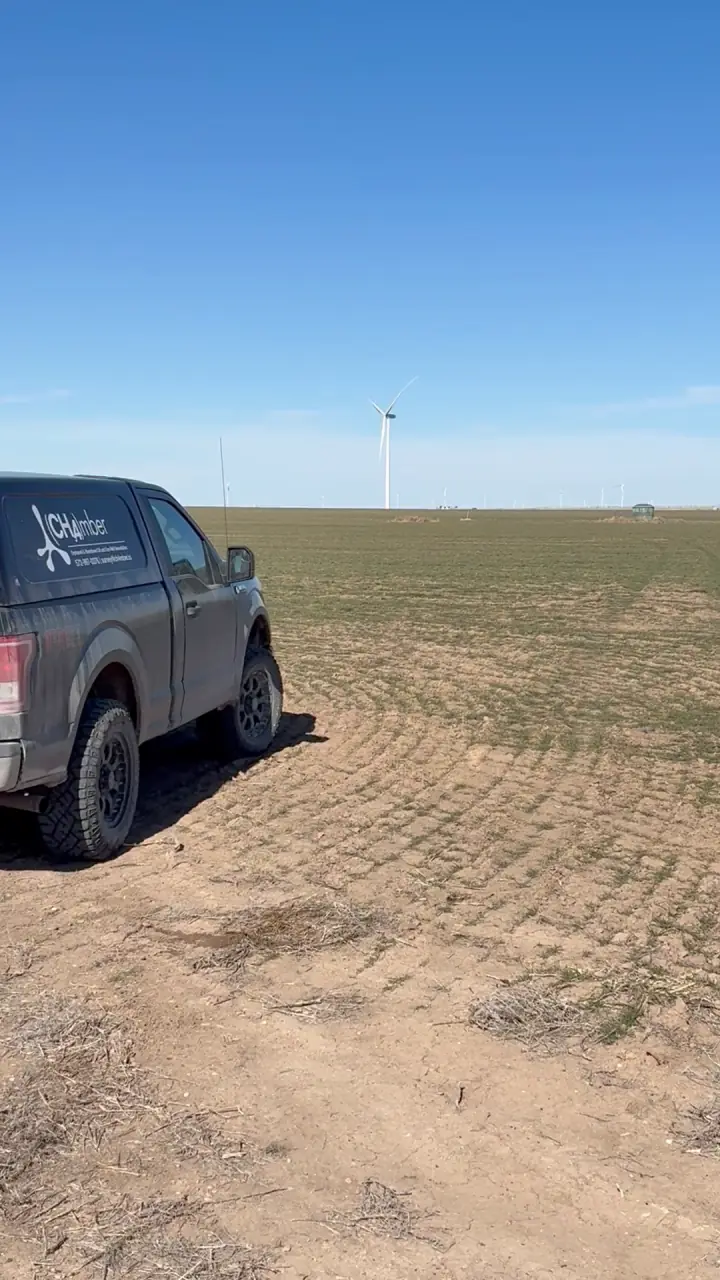
A survey trip is a series of bets placed one after another. Most orphaned wells are not leaking, so we rank them before we drive, but a ranking cannot say which part of a trip will turn out well. Each day the crew decides whether to keep working the area they are in or move to the next one, and the evidence is whatever the last few days turned up.
On one Oklahoma trip in August 2026, two areas came out very differently. In one, 3 of the 11 wells we measured were leaking. In another, 1 of 51 was. Nothing in the state records, the ranking or the drive in told us which area would be which.
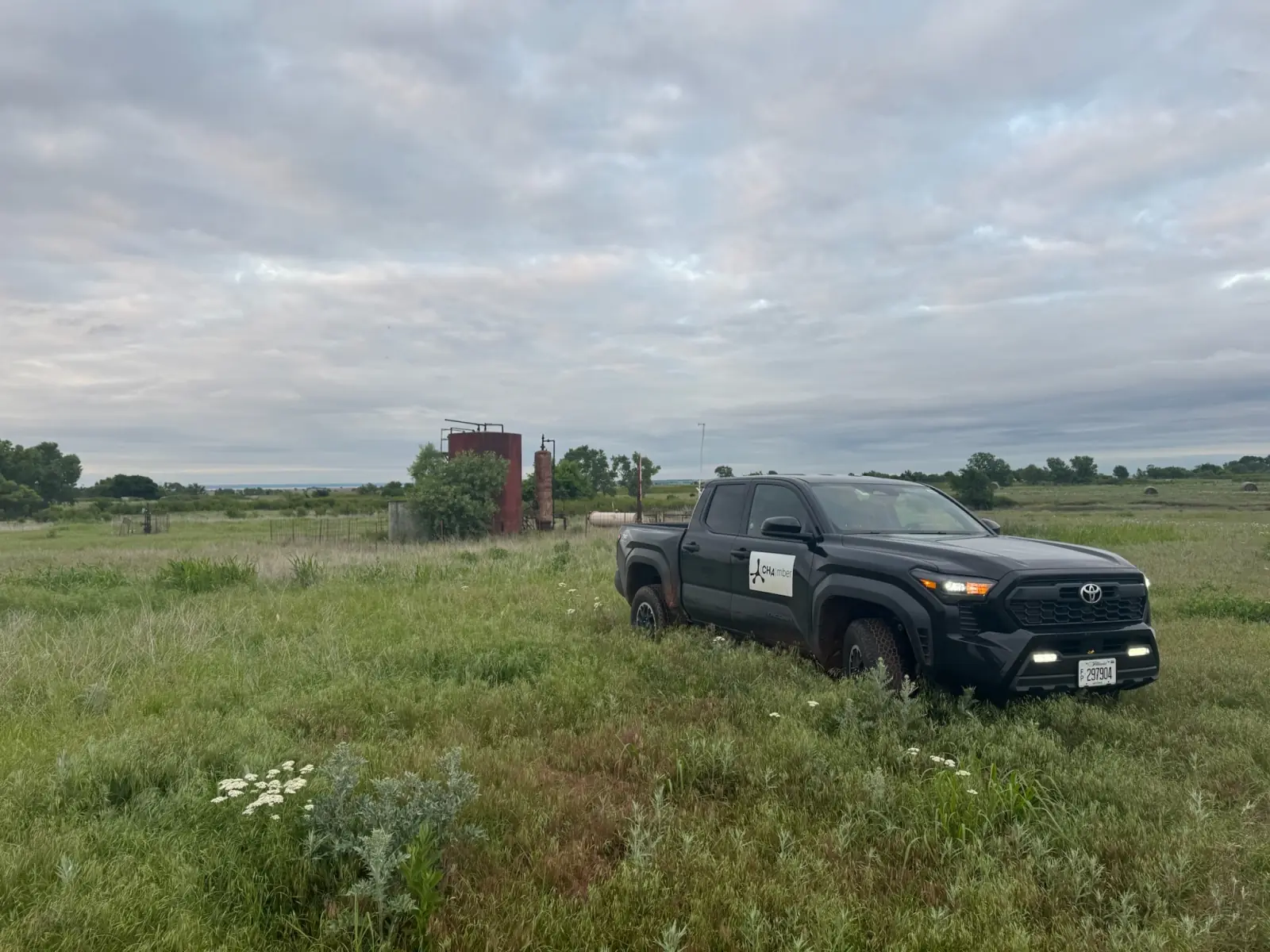
We wrote the rules into the trip plan
After that trip we wrote two rules into the plan, so that staying or leaving is decided the same way every time, and decided in advance rather than at the end of a long day.
- Double down. If an area is leaking at 3 or more of its first 20 measured wells, the crew works the wells within half a mile before moving on.
- Walk away. If an area is leaking at 1 or fewer of its first 40 measured wells, the crew moves on and leaves the rest of it.
The thresholds were read off those two results and fixed before the next trip, so they work as a decision rule; the samples behind them are small. The double-down threshold rests on an 11-well result, smaller than the 20-well window it governs, and our trip board shows that note beside the rule. They are a way to spend field days well. They make no claim about any county.
Counting wells measured, once each
Both rules count wells measured, and the difference from stops attempted is large. A stop where the gate was locked, the landowner was not home or the wellhead was not where the record put it tells us nothing about leaks. Leaks per stop attempted and leaks per well measured can differ by a factor of two or more, and mixing the two has led to wrong calls in our own program before.
A well visited twice is still one well. Our survey app records each visit on its own, so a well we went back to arrives twice. Left alone, the second visit takes a slot in the window, pushes a real answer out of it, and can turn a clear verdict into an unclear one, or tip an area into "walk away" and send the crew off ground that was producing leaks. So each well counts once. A recorded leak answer beats a blank one, and the well takes its place in the window from the first visit that produced an answer.
The window is the area's first 20 or 40 measured wells, in order, and the verdict freezes once it fills. An area that opens with 3 leaks in 20 and then measures thirty clean wells still triggered the double-down: the call was right on the evidence there was when it was made, and going quiet afterwards does not undo it. The running rate is shown next to the verdict and never stands in for it.

Six states instead of a yes or a no
A rule in our app is in one of six states. Met and not met mean the window is full and the rule has an answer. Still filling means the area can fill the window and has not yet. Unlikely means it has enough stops on the plan, but only if nearly all of them end in a measurement, which is more than we usually manage. Impossible means the area has fewer planned stops than the window, so it can never answer.
Then there is uncertain: the window is full, but some of the wells in it were measured without a leak answer being recorded, and those blanks could tip the verdict either way.
Uncertain and impossible both mean the rule cannot answer, for opposite reasons. In one the answers are missing; in the other the area is too small. Better recording at the wellhead fixes the first, and nothing fixes the second except a bigger area. On a recent trip plan, where roughly seven in ten planned stops end in a measurement, the walk-away rule could only ever resolve in two of the nine counties on the plan. The area whose 3-in-11 result suggested the double-down threshold could never fill a 20-well window at all. We keep those areas on the board, dimmed, because a blank space would read as an oversight.

Why "uncertain" gets its own name
The record for a well can say it was measured while the yes-or-no leak question was never filled in. The tempting move is to count those wells as clean. That puts them in the denominator while making it impossible for them to count as leaks, so every rate comes out low, and a low rate is precisely what triggers "walk away".
So the arithmetic keeps a range instead. If a full window holds a number of confirmed leaks and a number of wells with no answer, the true count sits somewhere between the confirmed leaks alone and the confirmed leaks plus every blank. The rule is checked at both ends. If both ends agree, that is the verdict. If they disagree, the window is uncertain and no verdict is asserted. Take a walk-away window of 40 wells with one confirmed leak and one blank: the true count is 1 or 2. At 1 the crew would leave; at 2 it would stay. Counting the blank as clean would have sent the crew away on an answer nobody recorded.
Blank answers are common enough to matter. Our estimate, read off the Oklahoma survey record, is that about 3.5% of measured wells carry no leak answer. At that rate roughly three in four 40-well windows hold at least one blank, so for the walk-away rule the question of whether a blank matters comes up most of the time. The same caution runs the other way: a double-down sends the crew to work around a leak only when the window has actually met the rule and that leak was recorded, never around a blank.
Computed on the phone
The rules run in the survey app itself, so the verdict is there at the wellhead even when the phone has no signal. The app shows the verdict and the surveyor makes the call. Every decision to follow a rule, and every decision not to, is kept so we can check afterwards whether the rules were any good.
A rule we wanted and did not adopt
The rule we wanted was the intuitive one: a leak found today makes its neighbors more likely to be leaking. Looking back over our Oklahoma results, it seemed to hold, because the leaks we have found do sit closer together than chance would place them.
Hindsight is the easy test, however. Before building anything we fixed what the rule would have to show, then replayed the dated survey record forward, asking of each well whether a leak had already been found within 2 km before it was tested. Across 699 wells and 51 leaks, 4 of the 44 wells tested after a nearby find were leaking (9.1%), against 26 of 328 same-county wells with no earlier find nearby (7.9%). The odds ratio was 1.16, with p = 0.77. That is no detectable effect, well short of the bar we had set.
That does not prove the effect is absent. Nearly all neighboring pairs in our record were tested on the same day, so the version a crew would actually use, a leak this morning and its neighbors this afternoon, can barely be tested yet; with 44 exposed wells we had about an even chance of detecting even a doubling. The question stays open, and the plan is to run it again once at least 100 wells have been tested after a nearby find. Until then the double-down rule rests on an area's measured rate, and working the half-mile neighbors is a matter of short drives and landowners we may already have reached.
How the ranking that puts wells on a trip in the first place works is on How we work.